


Introduction
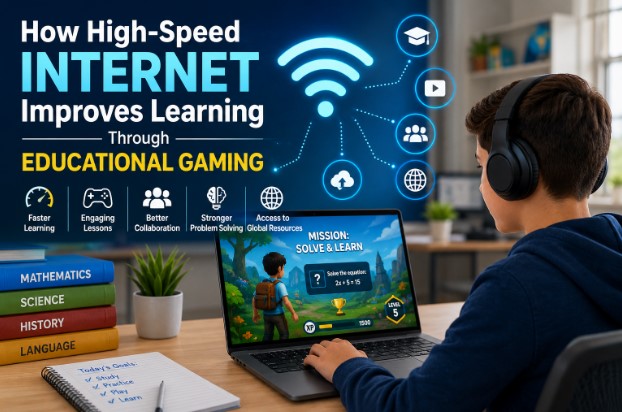
Education has changed dramatically over the last decade. Traditional classrooms are no longer the only place where students learn. Today, digital learning platforms, educational games, virtual classrooms, and cloud-based resources have become an important part of modern education. However, all these technologies depend on one essential factor—fast and reliable internet.
A stable internet connection allows students to access educational content without interruptions, participate in live classes, collaborate with classmates, and enjoy interactive learning experiences. Educational gaming has also become one of the most effective teaching methods because it keeps learners engaged while improving problem-solving, creativity, and critical thinking.
Why Internet Speed Matters in Education
Students spend hours every day watching educational videos, attending online lectures, downloading assignments, and participating in virtual discussions. Slow internet creates delays, buffering, and frustration that negatively affect learning.
Fast internet helps students:
- Join live online classes smoothly.
- Watch HD educational videos.
- Download learning resources quickly.
- Collaborate using cloud platforms.
- Access digital libraries without interruptions.
As schools continue adopting digital learning, internet quality becomes just as important as classroom resources.
Educational Gaming Is Changing Modern Learning
Educational games are no longer just entertainment. Many schools and teachers now use game-based learning to increase student participation and improve knowledge retention.
Games encourage learners to think critically, solve puzzles, make quick decisions, and work as a team. Subjects like mathematics, science, history, coding, and language learning become much more engaging when students interact instead of simply reading textbooks.
Because these games rely on real-time interaction, a fast internet connection ensures smoother gameplay and better learning outcomes.
The Connection Between Gaming and Internet Performance
Interactive educational games require low latency, stable connections, and fast download speeds. Lag or connection drops can interrupt lessons and reduce the effectiveness of learning activities.
Students interested in understanding how optimized gaming networks improve online performance can explore this detailed guide on gaming-corner-zap-internet:
The article explains how optimized internet performance enhances online gaming experiences, many of the same principles that also benefit educational gaming platforms.
Benefits for Teachers
Teachers also benefit from reliable internet during digital learning sessions.
They can:
- Conduct virtual classes without interruptions.
- Share multimedia presentations instantly.
- Use interactive quizzes and learning platforms.
- Monitor student progress in real time.
- Communicate efficiently with parents and students.
This creates a more engaging and productive learning environment.
Developing Digital Skills
Modern education is not only about academic knowledge. Students also need digital literacy, communication skills, teamwork, and technological confidence.
Using educational platforms and online collaboration tools helps learners become familiar with technologies they will use in higher education and future careers.
Gaming-based learning additionally improves:
- Strategic thinking
- Decision-making
- Communication
- Creativity
- Leadership
- Collaboration
These skills are valuable in both education and professional life.
Challenges Schools Must Address
Although internet-based learning offers many advantages, institutions still face several challenges.
Some schools struggle with:
- Limited internet infrastructure
- High network congestion
- Unequal access to devices
- Cybersecurity concerns
- Digital distraction
Addressing these issues requires investment in reliable internet services, secure learning platforms, and digital literacy programs.
The Future of Internet-Based Education
Emerging technologies like Artificial Intelligence (AI), Virtual Reality (VR), Augmented Reality (AR), and cloud computing are making education more immersive than ever before.
Students can now perform virtual science experiments, explore historical locations, practice medical procedures, and collaborate globally without leaving the classroom.
These innovations require stable, high-speed internet connections to function effectively.
Conclusion
Technology continues to reshape education, making learning more accessible, interactive, and engaging. High-speed internet is the foundation that supports online classrooms, educational games, collaborative learning, and future innovations.
As educational institutions continue embracing digital transformation, reliable internet infrastructure will remain one of the most important investments for improving student success and creating effective learning environments.